
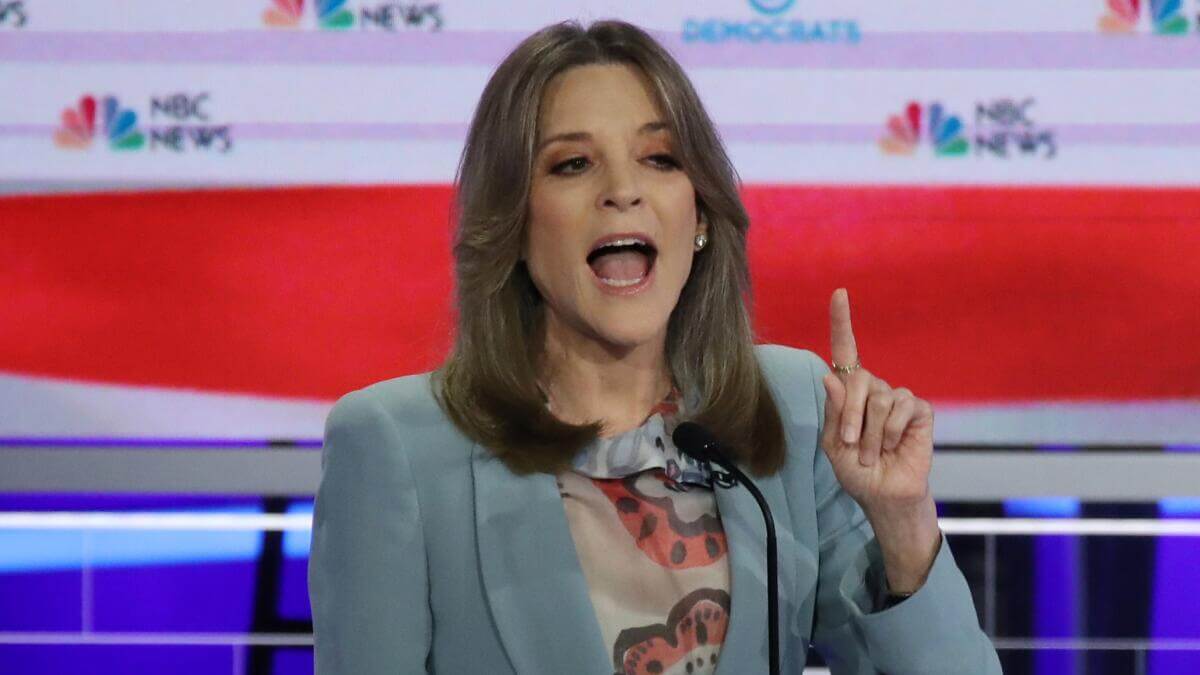
From spiritual author to political voice, Marianne Williamson’s journey reflects a changing American conversation about leadership, values, and healing.
Introduction
In a political landscape often dominated by technocrats and career politicians, Marianne Williamson stands out as an unconventional figure. Known for decades as a spiritual teacher and best-selling author, Williamson’s rise into national political consciousness surprised some observers and energized others. Her growing influence reflects a broader cultural shift—one that blends personal transformation, moral language, and progressive politics.
From Spiritual Teacher to Public Figure
Marianne Williamson first gained prominence long before she entered politics. As an author and lecturer, she became widely known for her work on spirituality, self-help, and personal growth. Her books, particularly those focused on love, forgiveness, and inner healing, attracted a large audience seeking meaning beyond material success.
Through lectures and media appearances, Williamson developed a public persona rooted in empathy and moral reflection. Unlike many public figures, she spoke openly about emotional pain, collective trauma, and the need for spiritual renewal—topics rarely addressed in mainstream political discourse at the time.
Entering the Political Arena
Williamson’s transition into politics marked a turning point in her public life. When she decided to run for national office, critics initially dismissed her as an outsider lacking traditional political credentials. Supporters, however, saw her as a refreshing alternative to conventional candidates.
Her political message did not abandon her spiritual roots. Instead, she reframed them in civic terms, emphasizing themes such as compassion, justice, and responsibility. She argued that policy debates should not only focus on economics and power but also on values, ethics, and the emotional well-being of society.
A Message That Resonated
What fueled the rise of Marianne Williamson was not just her biography, but the tone and substance of her message. She spoke directly to voters who felt disillusioned, unheard, or morally exhausted by politics as usual. Her rhetoric emphasized:
- The moral cost of inequality and poverty
- The psychological impact of systemic injustice
- The idea that love and compassion can be political forces
For many supporters, Williamson articulated frustrations they had long felt but rarely heard expressed on a national stage. Her willingness to name fear, anger, and despair—while also calling for hope—set her apart.
Media Attention and Public Debate
Williamson’s rise was amplified by intense media attention. Some coverage was supportive, highlighting her originality and sincerity. Other coverage was skeptical or even dismissive, portraying her as too idealistic or impractical.
Yet even critical attention expanded her reach. Viral debate moments, interviews, and social media clips introduced her to audiences who might never have encountered her work otherwise. In this sense, controversy became a catalyst, pushing her ideas into broader public discussion.
Critics and Challenges
Like any unconventional figure, Williamson faced significant criticism. Detractors questioned her policy depth, political experience, and reliance on moral language in a pragmatic system. Some argued that her emphasis on spirituality blurred the line between personal belief and public governance.
Williamson responded by asserting that moral clarity is not a weakness but a necessity. She maintained that technical expertise without ethical grounding leads to hollow leadership, and that real change requires both policy knowledge and moral courage.
Why Her Rise Matters
The rise of Marianne Williamson is significant beyond her individual career. It signals a hunger among many voters for leaders who speak to the human side of politics. Her popularity suggests that emotional intelligence, moral framing, and holistic thinking are increasingly valued in public life.
Whether or not one agrees with her positions, Williamson has helped expand the boundaries of political conversation. She challenged assumptions about who is “qualified” to lead and what kind of language belongs in politics.
Conclusion
Marianne Williamson’s rise reflects a moment of transition in American culture and politics. As a figure who bridges spirituality and civic engagement, she represents a growing desire for leadership that addresses not only laws and systems, but hearts and minds as well.
(FAQs)
Who is Marianne Williamson?
Marianne Williamson is an American author, spiritual teacher, and political activist. She is best known for her work on spirituality and personal growth, as well as for bringing moral and ethical language into modern political discourse.
Why is Marianne Williamson considered an unconventional political figure?
Williamson is considered unconventional because she did not begin her career in traditional politics. Her background in spirituality and self-help sets her apart from career politicians, and she openly emphasizes compassion, emotional healing, and moral responsibility in her political messaging.
What are the core themes of Marianne Williamson’s political message?
Her message focuses on compassion, social justice, economic inequality, peace, and the moral consequences of public policy. She often argues that political problems are deeply connected to emotional and spiritual issues within society.
Also Read:
Has Marianne Williamson held public office before?
No, Marianne Williamson has not held elected public office. However, she has been actively involved in political advocacy, public speaking, and national campaigns that brought her ideas to a wide audience.
Why has Marianne Williamson gained a strong following?
She has gained support from people who feel disillusioned with traditional politics and are seeking leadership that addresses both practical issues and deeper human concerns. Her authenticity and moral clarity resonate strongly with these audiences.
What criticisms does Marianne Williamson face?
Critics often question her political experience and argue that her ideas are overly idealistic. Others are skeptical of blending spiritual language with governance. Supporters counter that her approach brings much-needed ethical perspective to politics.
What does Marianne Williamson’s rise indicate about modern politics?
Her rise suggests a growing public desire for leaders who speak about values, empathy, and emotional well-being, not just policy mechanics. It reflects an evolving political culture that is open to nontraditional voices.
